Mold-Resistant Drywall for Ocala Bathrooms and Laundry Rooms: Where It Pays Off
August 19, 2025
📞 Talk to a Drywall Specialist: (352) 644-9394Frequently Asked Questions
What does the symptom check do?
It asks the same first questions a tech asks on the phone, in the same order. Your answers pick the path. At the end you get likely causes, how urgent it is, a rough range, and the service that fits.
Can the check be wrong?
Yes. It sorts by odds, and odds are not a test. That is why ranges are wide and why the wet and sag cases end with "this needs eyes on it" in place of a guess. The check visit buys the real tests.
Does my symptom summary come with my request?
Yes, if you send the form after a check. The summary lists the sign and each answer you gave. The tech reads it on the way, so the first ten minutes of the visit are saved.
What does a patch cost?
Most small patches run $250 to $450. Big patches run $450 to $900. Texture match can add a line. The written price comes before the work.
How much does new drywall cost?
$2.00 to $3.50 per square foot, hung and finished, in 2026. A single room often lands near $900 to $2,400 all in.
How long does a patch take?
One to two visits. Coats need dry time, so most patches span two days.
What Does My Drywall Project Cost?
Drywall is priced by the square foot of wall and ceiling surface — not by the size of your floor. That one fact explains most of the gap between quotes. Here are the ranges we see on real jobs around Ocala, and a calculator built on the same numbers.
Drywall Repair & Patch
Most single repairs land between $250 and $800. Pros price patches by the square foot of damaged area — roughly $55–$75 a foot around Ocala — but every repair carries a minimum job charge, because a patch takes the same setup and the same repeat trips for drying coats whether it's the size of a dinner plate or a door. Grouping several spots into one visit is the cheapest way to fix them: they share one minimum. Some repairs are priced flat by the job instead of the square foot: a wet wall section cut out, dried, and texture-matched (a 4×8 ft section ran $820 flat), long seam cracks (two rooms of ceiling seams re-taped ran $560 flat), and popcorn removal finished smooth (200 sq ft ran $540 flat).
New Drywall Installation
For bare studs finished paint-ready (a standard Level 4 finish), plan on $1.60–$3.05 per sq ft of wall and ceiling surface, materials and labor included. A typical 12×12 bedroom with 8-foot ceilings — that's 528 sq ft of surface — runs about $890–$1,700 around Ocala.
Room Remodel & Replacement
Tearing out old drywall and hauling it off adds $0.60–$1.20 per sq ft on top of new installation — a combined $2.20–$4.25 per sq ft. That same 12×12 bedroom, gutted and re-drywalled, runs about $1,210–$2,330. Opening walls can uncover surprises — water damage, old wiring — and those get priced once they're visible, never guessed at in advance.
Garage Drywall
Garages run $1.55–$3.30 per sq ft depending on finish. Code requires 5/8-inch fire-rated (Type X) board on the wall shared with the house, and on the ceiling when there's living space above it — that's the fire separation, not an upsell. Most two-car garages land between $1,900 and $4,100 finished.
Texture, Skim & Paint
On walls that are already up: skim coating runs $0.95–$1.30 per sq ft, orange-peel or knockdown texture $0.80–$1.85, and primer plus two coats of paint $1.05–$2.80. A typical room's walls — about 415 sq ft of surface — usually land between $770 and $1,930 for texture and paint together.
What Moves the Price
- Finish level. A full Level 5 skim coat (for gloss paint or bright, raking light) costs more than standard paint-ready Level 4.
- Ceilings. Overhead work runs roughly 20–25% more than the same area on a wall — lifts, heavier board, two sets of hands.
- Ceiling height. Taller walls mean longer sheets, scaffolding, and slower work.
- Texture matching. Blending a patch into existing orange peel or knockdown is hand work, and it's priced like it.
- Tear-out. Removing old drywall and disposing of it is its own line on the quote.
- Job size. Small jobs carry a minimum charge; on big jobs the setup spreads over more feet, so the per-foot price drops.
These are planning ranges, not a quote — your final price is confirmed after an in-person look, before any work starts.
A note on materials. These ranges are figured with standard drywall board and the finish level you pick above. Board isn't all the same price, though: moisture- and mold-resistant board — the green or purple board for bathrooms and basements — costs more a sheet than standard board, and on a big job that can push you toward the top of your range, or a little past it. Tell us where the work is and we'll confirm the exact board and the price at the in-person estimate, before any work starts.
Estimate Your Project
Measure the damaged section itself — length × width. A full 4×8 sheet section is 32 sq ft.
Spots done in one visit share a single minimum charge.
Price includes tearing out the old drywall and hauling it off.
Includes 5/8″ Type X fire-rated board on the wall shared with the house — and on the ceiling when there is living space above it — as code requires.
Free — no obligation. Your calculator numbers ride along with the request.
Send Your Project to Ocala Drywall Experts
Your estimate is attached automatically. Add your info and — if you can — a few photos of the project. Photos help us price the job before we ever set foot in the house. Prefer to talk? Call (352) 644-9394.
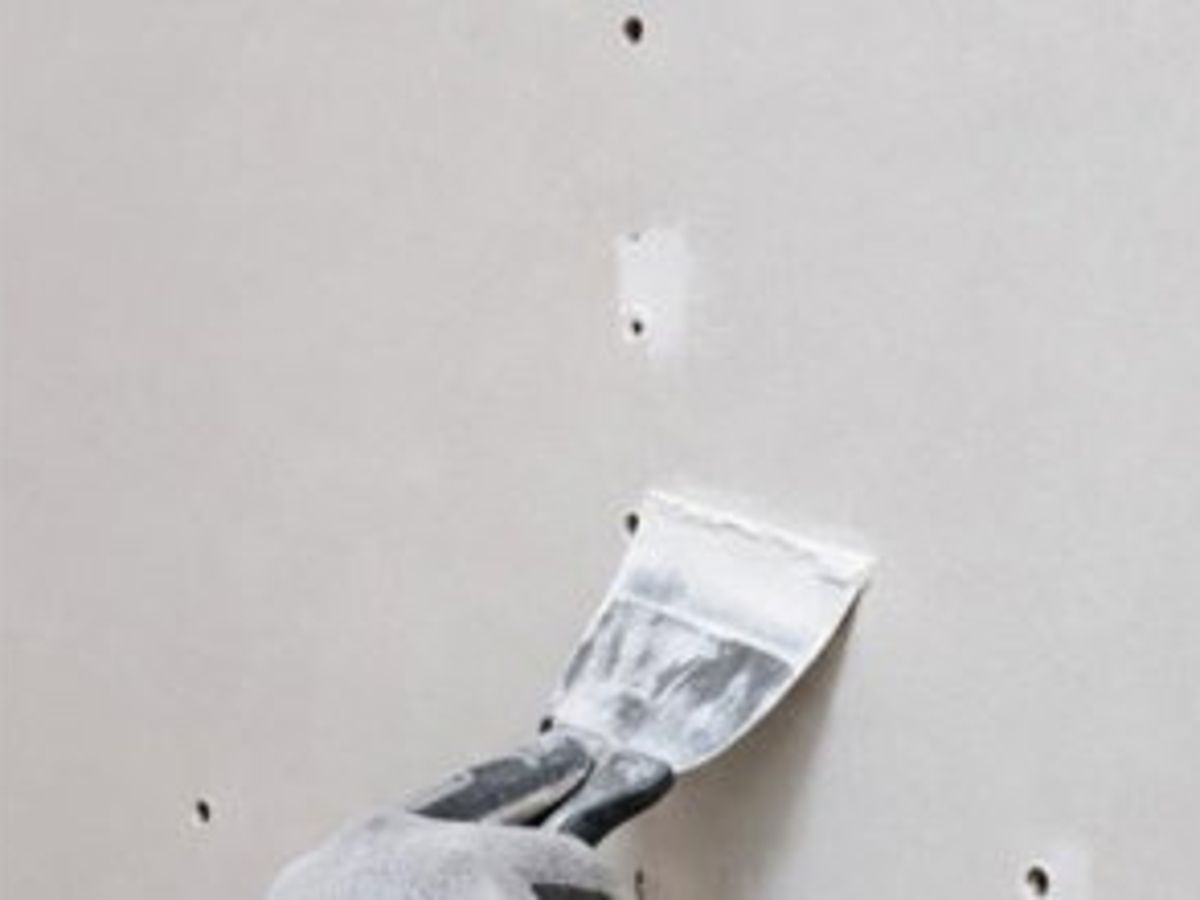
Stand in the drywall aisle and you will see the standard white-faced board next to green and purple boards that cost more and promise mold resistance. In an Ocala August — when the air outside is soup and every shower, load of laundry, and garage door opening pushes humidity into the house — it is a fair question whether the upgrade is real or just dye and marketing.
It is real, within limits. This post explains what is different about the board, where it earns its price in an Ocala home, and where regular board with good ventilation does the same job for less.
What is actually different about the board
Regular drywall is a gypsum core wrapped in paper, and the paper is the problem in wet rooms: it is organic, and mold eats organic material. Mold-resistant board swaps the paper face for a fiberglass mat and treats the core with antimicrobial additives, so the board itself offers mold much less to feed on. The Gypsum Association publishes the performance standards these panels are tested against, including mold-resistance testing under ASTM D3273, where top-rated boards score a 10 — no growth on the surface under lab conditions.
The honest limit: mold-resistant board is not mold-proof. Dust, soap film, and paint on the surface can still feed mold, and a board sitting in standing water will fail like any other. What the upgrade buys is a wall that does not become the food source when a room stays damp — which, in Florida, rooms do.
Where it pays off in an Ocala home
Bathrooms are the first call, especially the walls around tubs and showers and any bathroom without a window. Laundry rooms are second: a dryer venting a little lint and a lot of warm moist air, plus the ever-present chance of a washer hose leak, makes that room wetter than most people think. Third is the garage — in Ocala the garage wall shared with the house, and any garage you plan to cool or convert, sees humid air against cooler board all summer. Our moisture and mold resistant drywall installation page covers how we hang and finish it.
Basements barely exist in Marion County — the water table sees to that — but the same logic applies to any ground-floor room that has ever taken water, and to the lower two feet of wall in homes that have flooded before and been repaired with a flood cut.
Where regular board is fine
Bedrooms, living rooms, and hallways with working air conditioning do not need the upgrade; standard board there lasts for decades, and the money is better spent on the rooms that stay damp. A well-vented bathroom — a fan that actually clears the mirror in ten minutes — also narrows the gap. Ventilation first, board second: the U.S. Environmental Protection Agency makes the same point, that moisture control is the key to mold control, ahead of any material choice.
Pair it with the right finish
Mold-resistant board finished with regular compound and flat paint gives back part of what you paid for. Setting-type compound in the seams, a quality primer, and a bath-rated paint with a satin or semi-gloss sheen complete the package — the paint film sheds moisture instead of drinking it. And behind a tub or shower surround, board of any kind is the wrong material against direct water; that zone calls for cement backer board under tile, a different product for a different job.
What it costs, honestly framed
The board itself is the small number in this conversation: mold-resistant sheets run modestly more per sheet than standard board, and a bathroom uses a handful of sheets, not a truckload. The labor to hang and finish it is the same either way. Where the math turns is the alternative — tearing out a moldy wall later means paying for demolition, disposal, new board, finishing, and paint all over again, plus living with the room torn up twice. Paying a little more for the board once, in the rooms that stay wet, is the cheaper path across the life of the house.
One more place the upgrade quietly pays: resale. Marion County buyers and their inspectors look hard at bathrooms and laundry rooms for water history. Clean, mold-resistant walls in the wet rooms are one less finding on an inspection report.
Deciding for your house
If you are repairing one bathroom wall or building a laundry room into a garage, the price difference on a handful of sheets is small next to the cost of tearing out moldy board later. Tell us the room and we will tell you plainly whether the upgrade earns its keep there. Call (352) 644-9394 for a written estimate — the board choice will be a line on it, priced both ways if you want to compare.