Ceiling Stains After Summer Storms in Ocala: Leak or Condensation?
September 15, 2026
📞 Talk to a Drywall Specialist: (352) 644-9394Frequently Asked Questions
What does the symptom check do?
It asks the same first questions a tech asks on the phone, in the same order. Your answers pick the path. At the end you get likely causes, how urgent it is, a rough range, and the service that fits.
Can the check be wrong?
Yes. It sorts by odds, and odds are not a test. That is why ranges are wide and why the wet and sag cases end with "this needs eyes on it" in place of a guess. The check visit buys the real tests.
Does my symptom summary come with my request?
Yes, if you send the form after a check. The summary lists the sign and each answer you gave. The tech reads it on the way, so the first ten minutes of the visit are saved.
What does a patch cost?
Most small patches run $250 to $450. Big patches run $450 to $900. Texture match can add a line. The written price comes before the work.
How much does new drywall cost?
$2.00 to $3.50 per square foot, hung and finished, in 2026. A single room often lands near $900 to $2,400 all in.
How long does a patch take?
One to two visits. Coats need dry time, so most patches span two days.
What Does My Drywall Project Cost?
Drywall is priced by the square foot of wall and ceiling surface — not by the size of your floor. That one fact explains most of the gap between quotes. Here are the ranges we see on real jobs around Ocala, and a calculator built on the same numbers.
Drywall Repair & Patch
Most single repairs land between $250 and $800. Pros price patches by the square foot of damaged area — roughly $55–$75 a foot around Ocala — but every repair carries a minimum job charge, because a patch takes the same setup and the same repeat trips for drying coats whether it's the size of a dinner plate or a door. Grouping several spots into one visit is the cheapest way to fix them: they share one minimum. Some repairs are priced flat by the job instead of the square foot: a wet wall section cut out, dried, and texture-matched (a 4×8 ft section ran $820 flat), long seam cracks (two rooms of ceiling seams re-taped ran $560 flat), and popcorn removal finished smooth (200 sq ft ran $540 flat).
New Drywall Installation
For bare studs finished paint-ready (a standard Level 4 finish), plan on $1.60–$3.05 per sq ft of wall and ceiling surface, materials and labor included. A typical 12×12 bedroom with 8-foot ceilings — that's 528 sq ft of surface — runs about $890–$1,700 around Ocala.
Room Remodel & Replacement
Tearing out old drywall and hauling it off adds $0.60–$1.20 per sq ft on top of new installation — a combined $2.20–$4.25 per sq ft. That same 12×12 bedroom, gutted and re-drywalled, runs about $1,210–$2,330. Opening walls can uncover surprises — water damage, old wiring — and those get priced once they're visible, never guessed at in advance.
Garage Drywall
Garages run $1.55–$3.30 per sq ft depending on finish. Code requires 5/8-inch fire-rated (Type X) board on the wall shared with the house, and on the ceiling when there's living space above it — that's the fire separation, not an upsell. Most two-car garages land between $1,900 and $4,100 finished.
Texture, Skim & Paint
On walls that are already up: skim coating runs $0.95–$1.30 per sq ft, orange-peel or knockdown texture $0.80–$1.85, and primer plus two coats of paint $1.05–$2.80. A typical room's walls — about 415 sq ft of surface — usually land between $770 and $1,930 for texture and paint together.
What Moves the Price
- Finish level. A full Level 5 skim coat (for gloss paint or bright, raking light) costs more than standard paint-ready Level 4.
- Ceilings. Overhead work runs roughly 20–25% more than the same area on a wall — lifts, heavier board, two sets of hands.
- Ceiling height. Taller walls mean longer sheets, scaffolding, and slower work.
- Texture matching. Blending a patch into existing orange peel or knockdown is hand work, and it's priced like it.
- Tear-out. Removing old drywall and disposing of it is its own line on the quote.
- Job size. Small jobs carry a minimum charge; on big jobs the setup spreads over more feet, so the per-foot price drops.
These are planning ranges, not a quote — your final price is confirmed after an in-person look, before any work starts.
A note on materials. These ranges are figured with standard drywall board and the finish level you pick above. Board isn't all the same price, though: moisture- and mold-resistant board — the green or purple board for bathrooms and basements — costs more a sheet than standard board, and on a big job that can push you toward the top of your range, or a little past it. Tell us where the work is and we'll confirm the exact board and the price at the in-person estimate, before any work starts.
Estimate Your Project
Measure the damaged section itself — length × width. A full 4×8 sheet section is 32 sq ft.
Spots done in one visit share a single minimum charge.
Price includes tearing out the old drywall and hauling it off.
Includes 5/8″ Type X fire-rated board on the wall shared with the house — and on the ceiling when there is living space above it — as code requires.
Free — no obligation. Your calculator numbers ride along with the request.
Send Your Project to Ocala Drywall Experts
Your estimate is attached automatically. Add your info and — if you can — a few photos of the project. Photos help us price the job before we ever set foot in the house. Prefer to talk? Call (352) 644-9394.
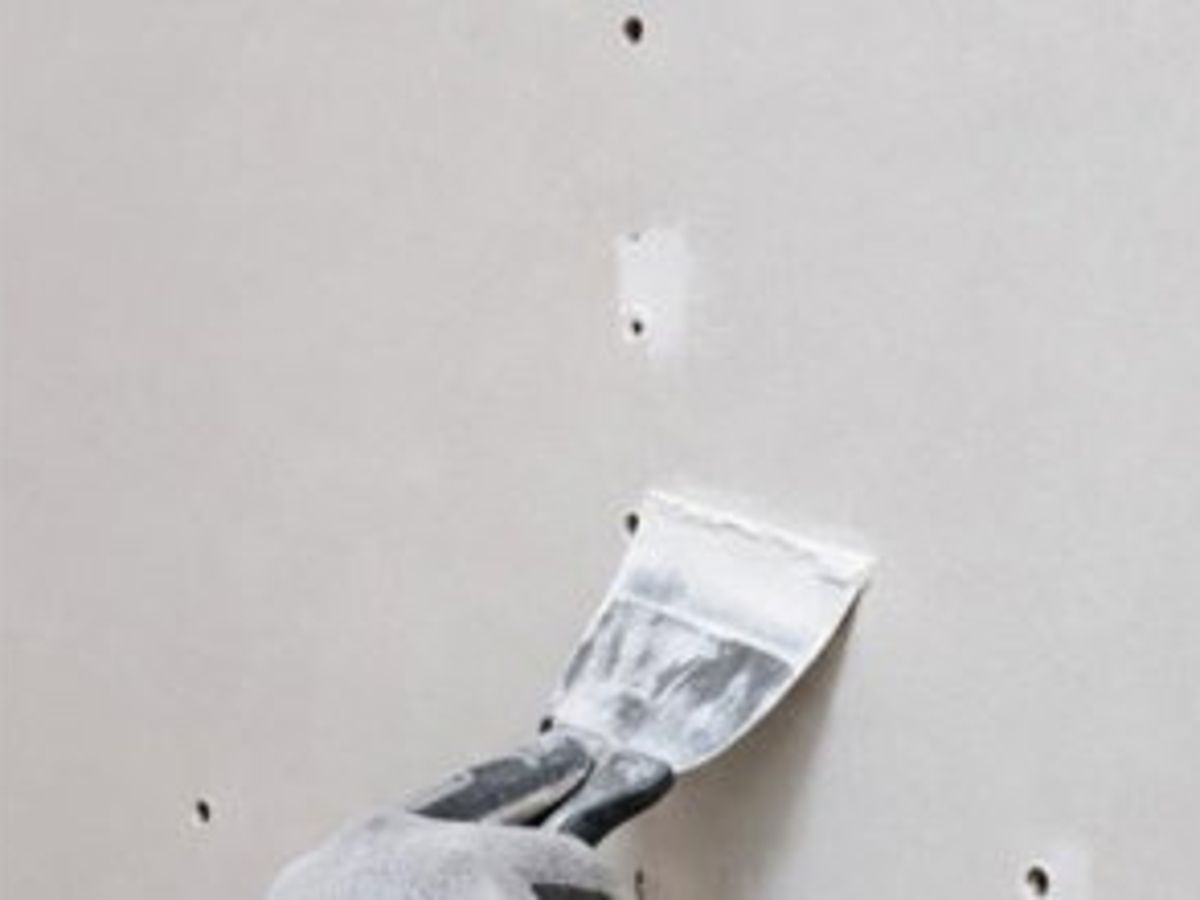
By mid-September, Ocala ceilings have stories to tell. A summer of afternoon storms, a few tropical systems passing through the Gulf, and air conditioners running flat out for four months — and somewhere in there, a tan ring blooms on a ceiling that was white in May. The homeowner's question is always the same: is the roof leaking?
Sometimes. But a good share of the September stains we look at are not roof water at all — they are condensation from the air conditioning system, and calling a roofer for a condensation stain wastes the same money as calling us for a roof leak. Here is how to sort yours before you call anyone.
Check one: the timing
A roof leak stain follows the rain. It appears or grows within a day of a hard storm, often during it, and it favors the spots where water gets in: below valleys, vents, flashing, and the edges of the roof. A condensation stain follows the heat instead. It grows slowly through the hottest weeks whether it rains or not, and it favors the lines of the air conditioning ducts and the area around supply vents — including the classic drip stain under an attic air handler with a clogged drain line.
Keep a simple log for a week: date the edge of the stain with a light pencil mark, note the weather, and see whether the ring steps past your mark after rain or after hot dry days. That one observation answers the question more reliably than any guess — including ours, over the phone.
Check two: the touch and the location
Press the stained board with your thumb. A leak that has been active leaves board that feels soft, crumbly, or noticeably cooler and damp. Condensation stains are usually surface events — the board stays firm, and the stain is lighter, more diffuse, sometimes with a faint pattern of tiny dark specks of mildew rather than a hard brown ring. Location helps too: a stain in the middle of a ceiling with no plumbing or ductwork above it points at the roof; a stain that runs in a line, or sits right beside a vent, points at the system.
The U.S. Environmental Protection Agency advises drying water-damaged materials within 24 to 48 hours to limit mold growth. A slow condensation problem can keep board lightly damp for weeks — not wet enough to drip, plenty wet enough to feed mold on the paper face inside the ceiling cavity. That is the quiet reason to identify the source instead of just covering the spot.
Why painting over it fails
Ordinary paint does not seal a water stain; the tannins and minerals in the stain bleed back through within weeks, which is why so many September ceilings have a faint ghost ring showing through fresh paint. The right sequence is: fix the source, confirm the board is dry and firm, seal with a stain-blocking primer, then paint. If the board is soft, the sequence starts with cutting out the damaged section — the work on our drywall ceiling repair page — because primer over spongy board is decoration on a failure.
A word about attic air handlers
A large share of Ocala homes have the air handler in the attic or the garage, and its condensate drain is the single most common ceiling-stain maker we see that is not a roof. The drain carries off gallons of water a day in September; algae and sludge narrow it until it backs up, and then the water goes over the pan's edge and into the ceiling below. Many systems have a float switch that shuts the unit down when the pan fills — if your AC stopped on a hot day and there is a stain nearby, that switch may have just saved your ceiling and told you the drain needs clearing.
Clearing the drain line once or twice a year is cheap prevention, and your AC service visit should include it. Ask the technician to show you where the drain exits outside the house; a dry exit pipe on a humid day is an early warning you can spot yourself.
Who to call for which answer
Stain tracks the rain and the board is soft: roofer first to stop the water, then us to repair the ceiling. Stain tracks the heat, sits near ducts or vents, board firm: an AC technician first — a clogged condensate drain or sweating duct is their fix — then a coat of stain-blocking primer may be all the ceiling needs. Stain with mold, sagging, or a wet smell: call us and we will open a small inspection hole if needed and tell you what is actually going on up there.
Call (352) 644-9394 and tell us what your pencil marks showed. That log, plus five minutes with a thumb on the board, usually settles leak versus condensation before anyone climbs into the attic.